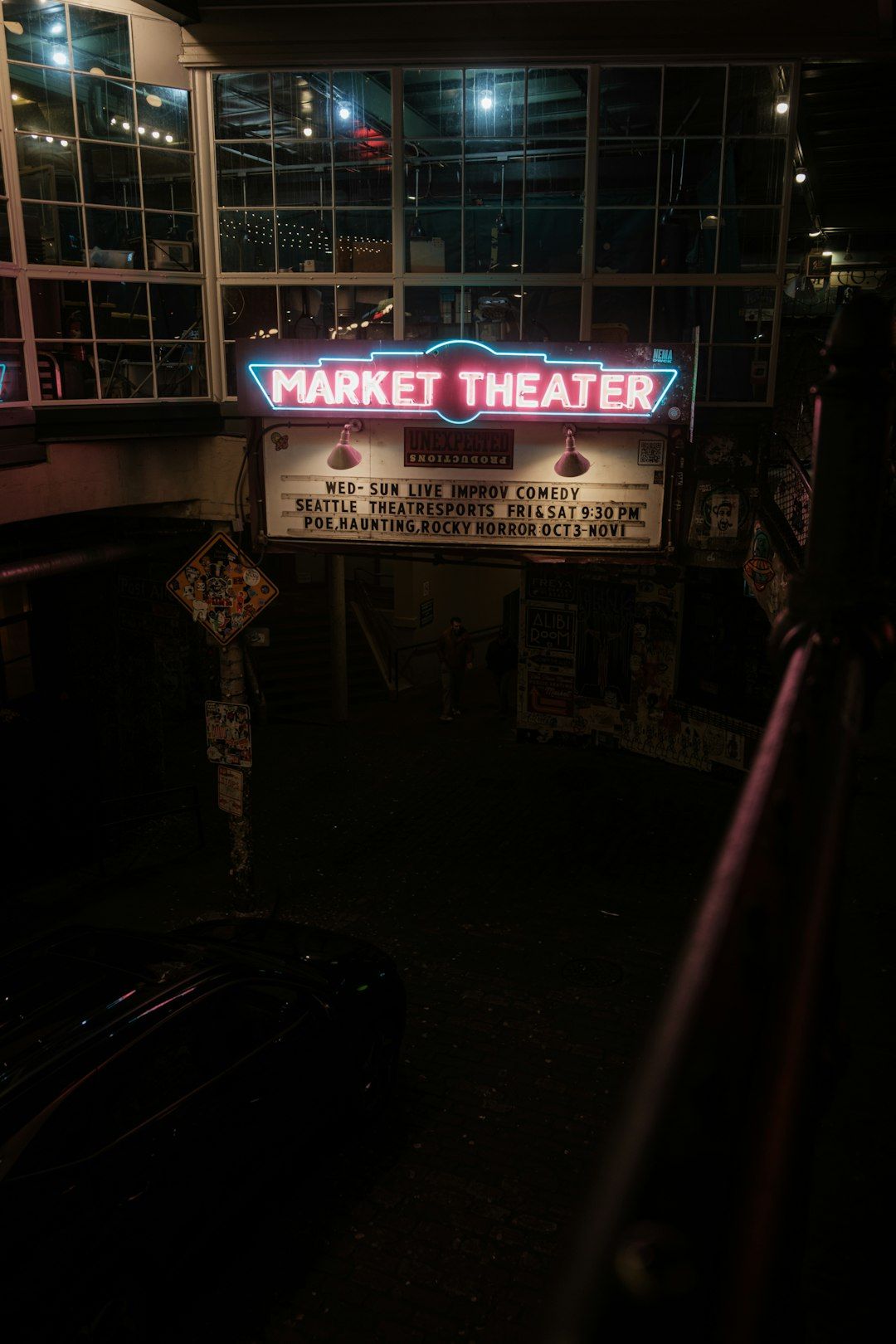
Northwest Film Forum's calendar turns to Vagabond on Sunday and stays there through Tuesday, so the Capitol Hill room spends the second week of November on a 41-year-old Agnès Varda film about a young woman who will not be found. There is no sequel to promote. There is no franchise to service. It's a three-night booking in a small room, and it happens to describe the whole month.
Moira Macdonald, the Seattle Times arts critic, opened her November survey of the city's independent cinemas by noting that Seattle is dark and probably raining, and that the remedy is somewhere that manufactures its own light. That's the seasonal demand in one line. The supply answering it is mostly older than the people buying the tickets.
What's Still on the Calendar
The first week of the month is gone, which matters if you're reading this on a Sunday and planning around it. Engauge, Northwest Film Forum's experimental festival restricted to work that originated on film, wrapped on Nov. 7. What remains is a tight, dated list, and almost none of it is new.
| Venue | Film | Original release | November 2026 dates |
|---|---|---|---|
| The Beacon | Symbiopsychotaxiplasm: Take One | 1971 | Nov. 9 |
| Northwest Film Forum | Vagabond | 1985 | Nov. 8 to 10 |
| Northwest Film Forum | The Parallax View | 1974 | Nov. 12 |
| The Beacon | Will Success Spoil Rock Hunter? | 1957 | Nov. 13, 17, 19 |
| Grand Illusion | Shaolin Soccer | 2001 | Nov. 15 |
| The Beacon | Breathless | 1983 | Nov. 18 and 19 |
| SIFF Cinema Uptown | Raise the Red Lantern | 1991 | Nov. 20 |
| The Beacon | All I Desire | 1953 | Nov. 29 and 30 |
Half the month's repertory weight sits at one address on Rainier Avenue. The Beacon in Columbia City holds four of the eight bookings above, including the Frank Tashlin series that frames three 1950s Technicolor comedies as documents of a national nervous collapse. The rest is scattered across Capitol Hill, the U District, Lower Queen Anne and Ballard. Going to all eight means crossing the city four or five times, which is its own argument for picking two.
A few of these come with a number attached. Raise the Red Lantern reaches its 35th anniversary at SIFF Uptown, and Shaolin Soccer hits 25 at the Grand Illusion, where Stephen Chow's soccer comedy plays as a one-night event. The Majestic Bay slots The Wrath of Khan into its Star Trek retro nights on Nov. 11, though that one didn't make the table because its anniversary math doesn't fit the pattern. An anniversary is the cheapest marketing a theater can get, and this month is built out of them.
The Median Age of a Seattle November
Take the eight dated titles above and work out how old each one is on the night it screens. Shaolin Soccer is youngest at 25. Raise the Red Lantern is 35. Vagabond lands at 41, Breathless at 43, The Parallax View at 52, Symbiopsychotaxiplasm at 55, Rock Hunter at 69, and All I Desire, the Douglas Sirk melodrama with Barbara Stanwyck, at 73. The median sits at 47.5 years and the average at 49.1.
That math isn't in anyone's press release. It's what the calendar says when you line the dates up against the release years. Half the films on the list opened in American theaters before 1980, which means a person could have caught four of them first-run and now be drawing a pension.
Then look at what's playing two miles away. AMC Pacific Place is selling The Cat in the Hat and Godzilla Minus Zero, both released Nov. 6. The multiplex and the repertory house stopped being in the same business a long time ago. One sells novelty by the weekend. The other sells a decision somebody made on your behalf and then put on a poster.
Why the Backlist Is a Business Decision
Repertory booking is structurally friendlier to a small room than first-run independent distribution. A license for an older title typically costs a fraction of what a new release demands, and the terms usually run short enough that a bad night doesn't become a bad quarter. Availability of a usable print or DCP is the real constraint, not competition for the slot.
The risk profile differs too. A first-run booking commits a theater to a week or more of showtimes on the hope that word of mouth arrives before the distributor pulls the film. A repertory night is one night, sometimes two, so a misfire costs a single evening instead of a full slate. That's how The Beacon can run a Tashlin series across three separate dates in November without wagering the month on 1957 comedy.
There's also an audience problem the model solves quietly. Nobody needs convincing that The Wrath of Khan is worth two hours. The film has already done 44 years of convincing. What the theater has to sell is the evening, the room, and the fact that it starts at 7 and isn't available whenever you feel like it. That's a much shorter pitch than most new releases require.
Curation Is the Product
The case for these rooms was never access. It's scheduling. Streaming spent the last decade turning film history into an infinite menu, and the predictable result is that a viewer opens the app, scrolls, and watches the thing the interface already put in front of them.
A cinema calendar is the opposite of a recommendation engine. Someone with taste and a budget picked this, and the constraint is the feature. Engauge, the festival that just closed at Northwest Film Forum, pushed further and admitted only work originated on film, a rule that exists for no reason except to narrow the field.
Scarcity is what produces the event. Shaolin Soccer has been available to watch at home for years. It plays once, on a Sunday, at the Grand Illusion, and that single fact is the reason to leave the house.
The Local Archive
Repertory houses also carry the part of the archive no distributor will license. The Beacon has two documentaries on its November slate about the Duwamish Tribe's fight for federal recognition, The Burning of Moses Seattle and Unrecognized: The Duwamish Tribe. Neither is the kind of title that turns up in a national retrospective series.
That programming is a civic function as much as a commercial one, and it's the piece of this month least likely to be replicated anywhere else in the city. A streaming catalog can hold a thousand films about Seattle and still never schedule one for a Tuesday in Columbia City.
By Nov. 30 the month closes on All I Desire, a 1953 melodrama that has been out of the conversation for decades and is now the last item on the calendar. Then December resets and somebody programs it all over again. The archive isn't the fallback for these rooms. It's the inventory, and it's the only inventory in town that the multiplexes aren't bidding against them for.
Strategic Takeaways
- ✓Every dated screening still ahead at Seattle's best-known repertory houses this month is an older film, and the newest of them turns 25 the week it plays.
- ✓The median age of those titles is 47.5 years, which makes the back half of November a deliberate bet on the archive rather than a gap in the schedule.
- ✓Repertory booking spreads risk across single nights and hands each theater a ready-made hook, which is why the model holds while first-run independent releases keep getting harder to place.

Largern Staff
Collaborative ideas and essays from the Largern desk on the ideas, habits, and shifts shaping modern life.
Comments (0)
No comments yet
Be the first reader to share your perspective on this story.