The Limits of the Conversational Interface
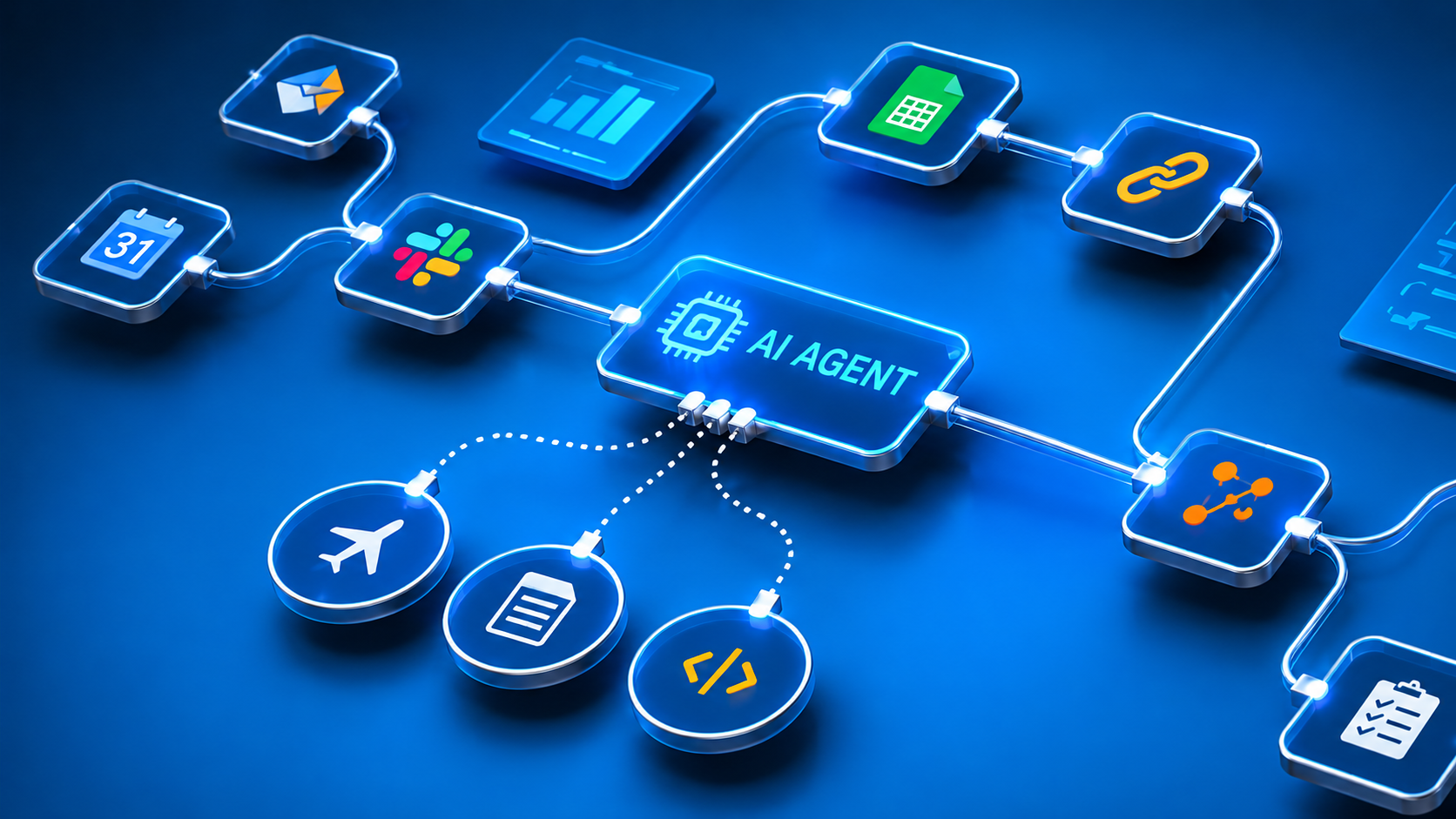
While conversational chatbots captured public imagination, their enterprise utility quickly hit a ceiling. Chatbots require continuous, active human steering: a user must write a prompt, evaluate the output, point out errors, and copy-paste results across third-party software applications. According to technical research published by Anthropic, real business productivity requires models that possess tool use: the ability to browse the web, write and run terminal commands, interact with databases, and resolve unpredictable errors autonomously inside isolated sandbox environments.
Conversational Chatbots vs Autonomous Software Agents
The architectural and operational divide between conversational assistants and autonomous software agents highlights how enterprise AI is shifting from passive generation to active workflow execution.
| System Dimension | Conversational Chatbots (e.g. ChatGPT-3.5) | Autonomous Tool-Calling Agents |
|---|---|---|
| Operational Workflow | Synchronous single-turn question and answer | Asynchronous multi-step loop (Reason, Act, Verify, Refine) |
| Environment Integration | Isolated chat window (no direct system access) | Direct API access, browser automation, terminal execution |
| Error Handling | Generates hallucinated apologies when incorrect | Deterministic testing: executes code, catches errors, self-corrects |
| Human Intervention | Continuous steering and copy-pasting required | Human-in-the-loop only for high-stakes financial approvals |
| Commercial Pricing Unit | Per-user monthly subscription seat ($20-$30/mo) | Per-task economic completion or percentage of labor value |
The SWE-bench Metric and the Software Engineering Shift
The definitive benchmark tracking this evolution is SWE-bench, an rigorous evaluation harness developed by academic researchers that tests whether an AI agent can resolve real, messy GitHub pull requests from popular open-source repositories. In early 2023, state-of-the-art language models solved fewer than two percent of real-world software engineering issues. By introducing automated test execution, search indexing, and iterative self-reflection, modern agentic harnesses routinely resolve forty to fifty percent of complex software bugs without human intervention.
From Software Seats to Outcome-Based Economics
As highlighted in autonomous workflow research from OpenAI, the shift to agents represents an existential transformation for enterprise SaaS pricing. For decades, business software was sold on a per-seat basis: companies bought licenses for every employee who logged into an application. When autonomous agents perform the work of ten employees directly through API calls, per-seat pricing collapses. In its place, the technology industry is transitioning to outcome-based economics, where software providers charge for completed tasks, reconciled ledgers, and verified pull requests.

Anthony Dami
Technology & Culture writer at Largern, focusing on AI, consumer hardware, film, internet culture, and the routines and tools behind everyday life.
Comments (0)
No comments yet
Be the first reader to share your perspective on this story.