The Great Depletion of Human Knowledge
For the first generation of large language models, the training recipe was brute-force ingestion: scrape every accessible Wikipedia article, digitized book library, Reddit discussion, scientific paper, and GitHub repository in existence. By mid-2026, research institutes and AI labs arrived at a sobering mathematical consensus: humanity has run out of high-quality web text.
According to landmark research published by Epoch AI on data scaling boundaries, the stock of unique, non-repetitive human-authored writing on the public internet was largely depleted across the latest training runs. Frontier model developers cannot simply double their training datasets because there are no more unread human words left to crawl.
This data bottleneck has ignited the most secretive technological race in Silicon Valley: the transition from passive human web scraping to autonomous, synthetic data generation.
Self-Play and the Power of Formal Verification
Early experiments in synthetic data suffered from severe pitfalls, famously termed 'model collapse' in a seminal study published in Nature, a degeneration where models trained on their own unchecked outputs rapidly hallucinated and lost coherence. Today, frontier researchers have overcome this barrier through formal algorithmic verification.
Rather than training on freeform synthesized text, frontier models generate data in domains where correctness can be mechanically proven by a compiler, mathematical solver, or physics engine. A model writes millions of candidate software programs or mathematical theorems; a deterministic compiler tests every single execution; only mathematically verified proofs and flawless code are saved into the next training corpus.
This mirrors the breakthrough of AlphaZero by Google DeepMind in chess and Go: models do not need to study human games; by playing millions of simulated iterations against themselves under strict rules, they discover novel, superhuman reasoning pathways.
Synthetic Physics and Deterministic Verification Harnesses
The synthetic data revolution extends far beyond code and text into the physical world. In robotics and autonomous mobility, physical trial-and-error is prohibitively slow, dangerous, and expensive.
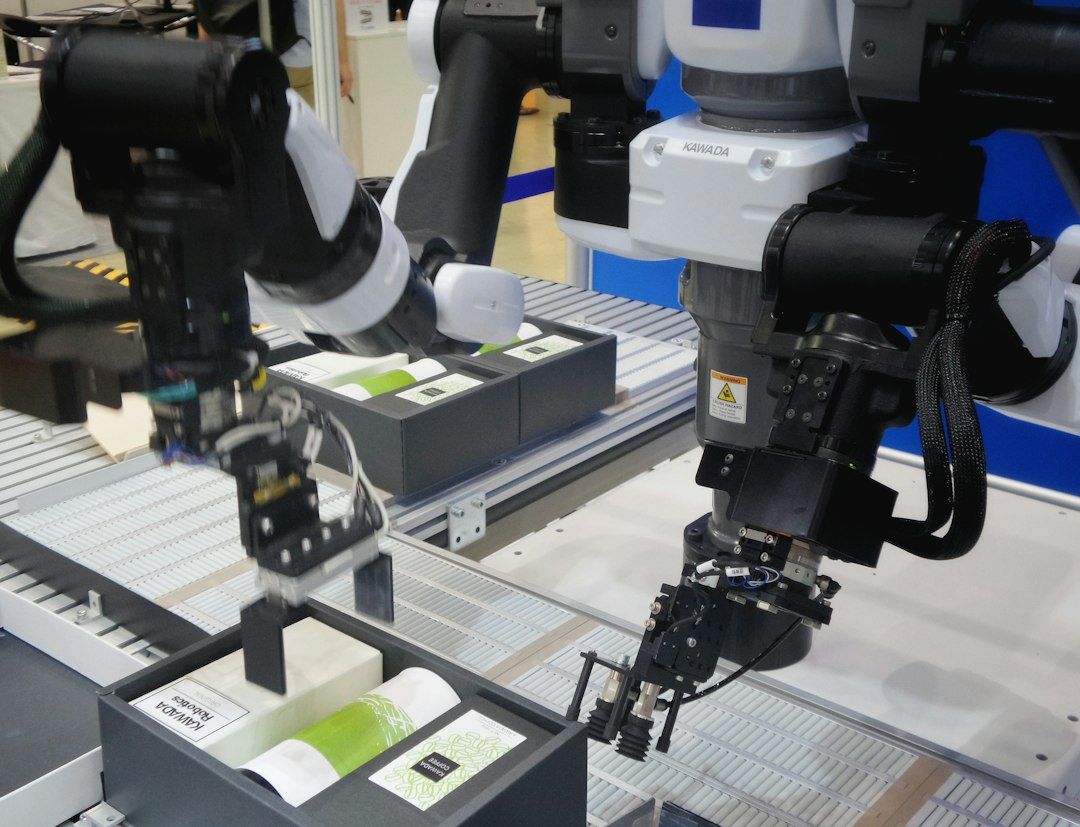
Robotics labs are now training general-purpose robots inside photorealistic, accelerated physics simulators powered by tools like Nvidia Isaac Sim. Inside accelerated simulation environments, millions of virtual robots practice grasping irregular objects, navigating terrain, and recovering from falls across decades of simulated time every afternoon.
By the time a neural model is flashed onto a physical humanoid robot on a factory floor, it has already accumulated ten thousand lifetimes of physical interaction data synthesized inside a server cluster.
| Domain | Synthesis Methodology | Deterministic Verification Harness | Model Collapse Risk |
|---|---|---|---|
| Formal Mathematics | Automated conjecturing via self-play search | Lean 4, Isabelle, and formal theorem provers | Zero (absolute proof validity) |
| Software Engineering | Spec-driven implementation and refactoring | Unit test suites, AST linters, sandboxed compilers | Minimal (binary test pass/fail) |
| Robotics & Kinematics | Domain randomization in digital-twin worlds | PhysX, Isaac Sim, and MuJoCo physics engines | Low (bounded by physical dynamics) |
| Natural Language | Chain-of-thought distillation and debate | Multi-agent cross-examination and fact check scoring | High (requires strict external grounding) |

Anthony Dami
Technology & Culture writer at Largern, focusing on AI, consumer hardware, film, internet culture, and the routines and tools behind everyday life.
Comments (0)
No comments yet
Be the first reader to share your perspective on this story.