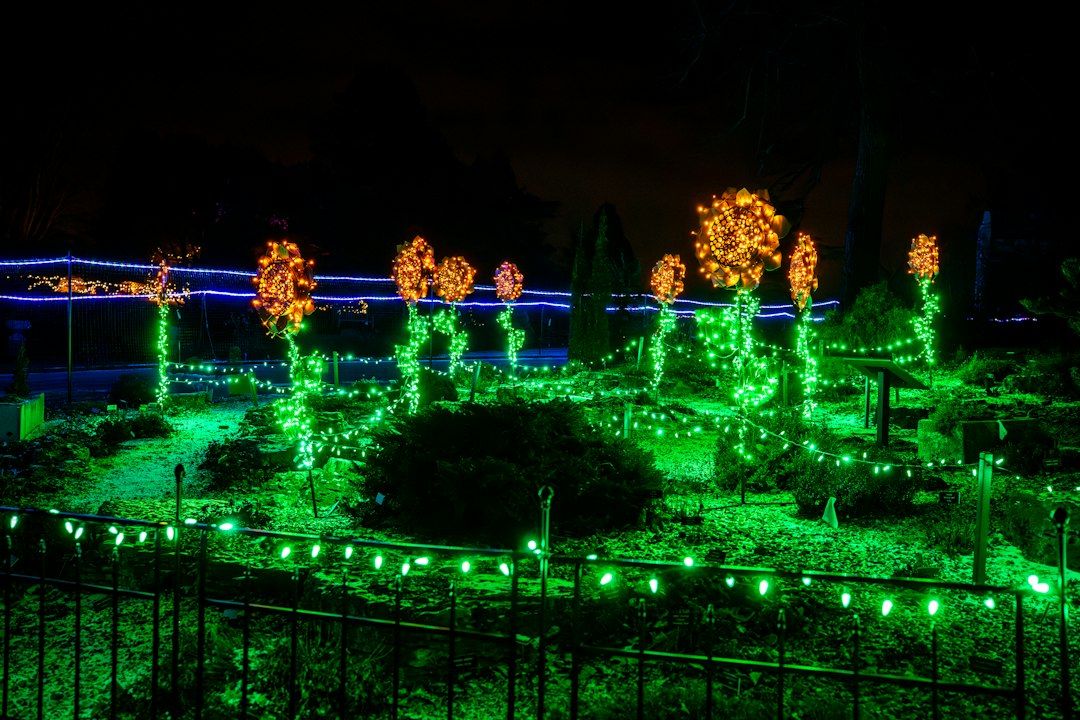
Garden Glow opened at the Missouri Botanical Garden on Nov. 14 and runs on select nights through Jan. 2. That's fifty days built around two million lights, sold in advance, with sensory and family nights listed like a touring act's acoustic set. It doesn't rely on anyone deciding at 6 p.m. to drive over. St. Louis still has a fall festival season, and this year it starts at a checkout page.
The list most of the region will actually use to plan any of it went up on Nov. 10 at STLSportsPage, the site Rob Rains has run since his years on the Cardinals beat. It's an open post, updated as events arrive, with readers invited to email what the editors missed. Modest as that is, it works as the region's autumn calendar.
The Calendar Is Intact. The Gate Changed.
Wild Lights at the Saint Louis Zoo runs select nights from Nov. 27 through Dec. 30. The Jingle Bell Bash takes Suson Park on Dec. 4 and 5, the National Museum of Transportation opens its holiday event on Nov. 27, and Garden Glow keeps going past New Year's Day. Between the last week of November and the first days of January there's hardly a night without a scheduled, ticketed thing to do.
The front half of autumn looks like a different economy. Applefest at Eckert's in Belleville wrapped in late September and Oktoberfest St. Louis took the Oct. 2 to 4 weekend, both built on daylight, parking lots and no real need to reserve anything. They still happen. They just stopped being where the density is.
The density moved after dark. A harvest festival depends on a field and the weather. A light show depends on electricity, a scanner and a queue cut into half-hour blocks, which is easier to control, and control is what makes an event worth producing at scale. That's why the tail of the year, once the dead zone between costume season and Christmas, is now the busiest stretch on the calendar.
Two Million Lights, One Pricing Model
The two anchor shows are close enough in format to compare directly. The differences are operational.
| Dimension | Garden Glow, Missouri Botanical Garden | Wild Lights, Saint Louis Zoo |
|---|---|---|
| Run | Select nights, Nov. 14 to Jan. 2 | Select nights, Nov. 27 to Dec. 30 |
| Nightly window | 5 to 9:30 p.m. | 5 to 8:30 p.m., last entry 8 p.m. |
| Adult ticket | Date-based, varies by night | $19 general, $16 for Zoo members |
| Youngest guests | Family nights on the schedule | Free under 24 months |
| Lights | More than two million | More than one million |
| Sensory night | Nov. 30 | Dec. 7 |
| Paid extras | Fire pit rental, Dine and Glow package | Wild Explorer VR at $5 |
Wild Lights expanded across Historic Hill this year and added the Herpetarium, Dinoroarus and the Primate House to the open exhibits. Santa is on site nightly through Dec. 23, the 4D theater runs a Rudolph film, and the carousel and penguin coast stay open. The longer people stay, the more a flat ticket looks reasonable.
Garden Glow runs the same play with a softer texture. Two million lights across the garden's paths, a holiday flower and train show, and a fire pit you can rent by the hour. Prices move with the date, standard practice for anything facing peak demand. Dec. 20 costs more than Nov. 18 because it should.
The membership tier is the tell. Zoo members pay $16 instead of $19, a 16% gap that only pays off if a household returns more than once. That makes the tier less a discount than a standing invitation to come back, which is how a light show starts behaving like a season pass.
What a Night Out Costs Per Hour
The math isn't on any event page. Wild Lights runs three and a half hours, so $19 works out to $5.43 per adult per hour. A family of four that stays the whole window spends $76 to stand on grounds that cost nothing to walk into at 9 that morning. Add the $5 VR upgrade for two kids and the evening clears $86. The ticket does cover a lot:
- Visits with Santa through Dec. 23
- "Rudolph the Red-Nosed Reindeer 4D" in the theater
- The Herpetarium, Dinoroarus and the Primate House
- Penguin and Puffin Coast, the carousel and the sea lion tunnel
- Parking on both Zoo lots, as available
By that accounting the price holds up. As a per-hour rate against free daytime admission to the same campus, it's a reminder that the Zoo has learned to monetize identical real estate twice in one day. Light festivals elsewhere follow the same curve, as Diwali's global boom showed: spectacle budgets climb while per-visitor spend stays flat.
Who Gets Left Off the Guest List
Both shows schedule a sensory-friendly night, Nov. 30 at the Botanical Garden and Dec. 7 at the Zoo. Those evenings exist because the default product is loud, crowded and visually relentless. Making room for visitors who need a quieter version is the right call, and it concedes that the standard night isn't built for everyone.
The purchase is the harder barrier. Wild Lights requires online tickets in advance and the Zoo warns that many nights sell out, so there's no decision to be made at the gate because there's no gate transaction. For a household with a card and a calendar that's small friction. For anyone without reliable internet or the cash to commit three weeks out, it's a door that used to be open.
Free events have the opposite failure mode. They don't sell out, and they don't need planning. The orchard in September and the Oktoberfest tent in early October asked nothing in advance, which is exactly why they generated less revenue, and why the calendar drifts toward the events that ask for your card first.
Why a Baseball Site Ends Up Running the Calendar
The keeper of the list matters. STLSportsPage is a Cardinals site by origin, and its events coverage has quietly become a food and travel desk. Suzanne Corbett filed a Halloween haunts and eerie sips guide on Oct. 13, an appetizer video for tree-trimming parties on Nov. 9, and a holiday food drive piece on Nov. 14, while Rains keeps the festival post current between baseball items.
That mix isn't accidental. Local food and place coverage migrates to whoever will still do it, and a regional sports site with an established audience turns out to be a workable home for a city calendar. The alternative in most American metros is a patchwork of tourism listings and social posts that don't cross-reference each other.
The commercial layer is thickening underneath. Clementine's Ice Cream released a fall collection of limited-edition pints inspired by Edgar Allan Poe, sold in stores and online. Even a scoop shop now builds a seasonal narrative with a launch window and a scarcity claim, and every corner of the autumn calendar is learning the same lesson about naming the drop.
The lights will be up on Jan. 2 whether or not anyone books a slot. What changed is that seeing them now takes a decision made weeks earlier, on a screen, at a price that moves with the date. A St. Louis autumn used to be something a family stumbled into on a free Saturday afternoon. This year it's a reservation, and the running list of what's left is kept, without a ticket window of its own, by a baseball writer with an open inbox.
Strategic Takeaways
- ✓St. Louis's fall calendar didn't shrink. It shifted from free daytime harvest festivals to paid, timed-entry light shows.
- ✓Garden Glow and Wild Lights overlap across most of December, making late November the densest and most expensive stretch of the city's year.
- ✓The events now selling out all require advance online purchase, and that requirement, more than price, decides who actually goes.

Largern Staff
Collaborative ideas and essays from the Largern desk on the ideas, habits, and shifts shaping modern life.
Comments (0)
No comments yet
Be the first reader to share your perspective on this story.