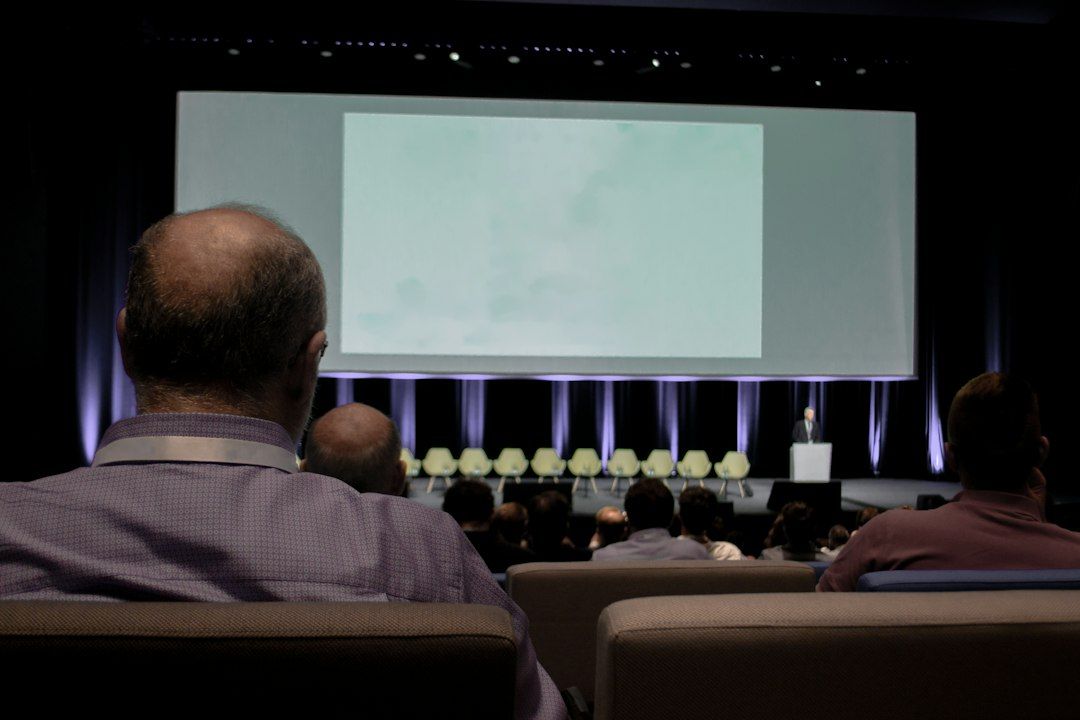
On November 10, in a conference room in Century City, Evan Shapīro put up a slide that few people in the room wanted to be sitting under. It covered 376 feature releases from the previous three years, the combined output of the major studios and the independent labels. After marketing costs and the roughly 50 percent cut that theater operators collect off the top, that entire body of work had returned a negative figure from the theatrical window. The one exception was A24, whose modest positive result leaned heavily on Backrooms, a horror film that began as found-footage shorts on YouTube.
The setting mattered as much as the slide. The talk was the keynote of the American Film Market's first Global Screen Economy Summit, a half-day forum the market created this year to discuss consolidation, AI and the creator economy in one sitting. The Hollywood Reporter covered the summit's launch as a response to an independent business upended by all three at once.
Shapīro has been circling this argument for a while, and he tends to state it without decoration. Speaking to PBS News' Geoff Bennett, he said: "The creator economy, this podcast stuff that's made by artists and delivered direct to consumers, that's where the industry is all headed. It is not headed back to Hollywood. It is not headed to these big studio systems."
The Sample Size Is the Story
A bad slate losing money is not news. Studios have produced bad slates forever. What matters here is the width of the sample. Three years, 376 releases, roughly 125 features a year, and the aggregate still came out under water. A business that cannot find one profitable theatrical outcome across that many attempts is not having a bad run. It is running a model that no longer balances.
Hollywood spent the summer telling itself a friendlier version of the same story. Summer 2026 was widely reported as the strongest season for ticket sales since the pandemic, and in a narrow sense it was. Zoom out and that summer still sold 40 percent fewer tickets than the peak year of 2010 and 32 percent fewer than the last pre-pandemic summer of 2019. Reuters reported theaters sold an estimated 470.9 million tickets through the first 30 weeks of 2026, against 747.3 million over the same stretch of 2019.
Both facts hold at once. Attendance is falling. Revenue is holding. The gap between them is price, and price has been the industry's growth strategy for a quarter century.
Ticket Prices Are Carrying the Illusion
Average ticket prices are up 128 percent since 2000, by Shapīro's count. That mechanism lets a shrinking audience generate near-normal grosses and lets an earnings release read like a recovery. AMC's second quarter showed revenue up 35.6 percent to $1.39 billion, a real swing for a chain that spent years digging out of pandemic debt. A circuit earning more per head from fewer heads is still a different business from one growing its audience.
Set the cinema window against the rest of a film's life and the imbalance sharpens. A Kroll study found that OTT sale of digital rights accounted for 44 percent of film revenue in 2023 and 56 percent in 2024. Theatrical is now a minority window inside a majority-digital business, and it is the only window where a middleman takes half the gross before the film sees a cent.
| Revenue window | What the data shows | What it returns |
|---|---|---|
| Streaming and OTT licensing | 56 percent of film revenue in 2024, up from 44 percent in 2023 | Close to a full dollar per dollar licensed |
| Theatrical exhibition | Grosses near 2019 levels, admissions down roughly a third | Negative in aggregate across 376 releases |
| Transactional rental and purchase | Industry forecasts call it a critical bridge between windows | Steady, small, unglamorous |
| Merchandise and fandom | Glitch used a cinema run to lift merch and streaming leverage | Compounding, if an audience exists first |
Put the two published figures beside each other and the incentive structure falls out. A dollar of box office returns about 50 cents to the film after the exhibitor split, while a dollar of licensing returns nearly the whole dollar. A cinema release therefore has to gross roughly twice what a streaming deal pays just to match it. Nobody greenlights a film to break even on a comparison, which is why the window keeps shortening and the marketing spend in front of it keeps climbing.
Two YouTubers Beat the Studios at Their Own Game
Backrooms and Curry Barker's Obsession both crossed $200 million worldwide, according to the figures presented at the summit, and both arrived from YouTube with audiences already attached. Obsession became a genuine theatrical story this year, holding week over week in a pattern distribution chiefs spend careers trying to engineer.
Animation shows the same shape. Glitch Productions built The Amazing Digital Circus as a YouTube series, then used a cinema release to drive merchandise and strengthen its position with streaming buyers. That inverts the old sequence, where a studio bought awareness first and hoped for an audience second. Glitch showed up with the audience and used the theater as an upsell.
This is where the surprising resurrection of the sixty-million-dollar studio film picks up an uncomfortable footnote. Mid-budget filmmaking is returning because it's cheaper than franchise spectacle, but the marketing line in front of it has not come down. A creator with four million engaged viewers is a distribution asset nobody has to buy, which explains how a 376-film studio slate lost money while two video-first productions cleared $200 million each.
Where the Leverage Actually Moved
Read the AFM figures as a marketing problem rather than a production problem and the pieces line up. Studios pay to manufacture awareness in a market where attention has never been more scattered. Creators amortise that cost across years of free uploads before a feature exists. The practical rules for anyone financing films right now look like this:
- Budget the theatrical release as a promotional expense with a box office receipt attached, because that is what it now is.
- Weight engagement depth over reach, since a dense fandom converts on opening weekend in a way a broad, indifferent audience does not.
- Negotiate harder on post-theatrical terms than on the theatrical split, because that is where the money sits.
- Treat an owned audience, whether a channel, a list or a community, as an asset on the balance sheet.
- Show a financier a demonstrated audience before the shoot, not a comp set built from other people's films.
The infrastructure has already shifted to meet them. YouTube's presence at MIPCOM in 2025 read across the trade press as a signal rather than a stunt, the platform that hosts the audience asking for a seat at the rights table. Distribution outfits now license hundreds of titles a month through automated encoding and royalty systems, dissolving the one-deal-at-a-time model that defined independent film sales for decades.
The creator versus studio framing implies a fight, and a fight implies two sides chasing the same prize. They aren't. Studios compete for scarcity: release dates, franchise IP, available stars. Creators compete for attention, which is abundant and cheap to earn with the right voice. When the scarce asset stops being the one that generates revenue, leverage changes hands without an announcement.
"That's All Folks?" was the title Shapīro gave the 376-film analysis, and the question mark is doing honest work. Movies aren't dying. Fewer than a third of Americans visit a theater in a given year, and those who do pay 128 percent more than they did in 2000, so the room is smaller and better monetised. What's dying is the assumption that a studio's distribution machine is the gate standing between a film and its audience.
The ledger from Century City is a receipt, not a forecast. Over three years and 376 releases, the most expensive marketing apparatus in entertainment produced a negative return on the window it was built to serve, while a YouTuber's found-footage horror film carried the only label with a positive one. The next feature to get financed will be the one whose audience can be pointed to before cameras roll, and that decision now gets made in a different room from the one that ran this business for a century.
Strategic Takeaways
- ✓Across 376 film releases over three years, the theatrical window returned a negative collective figure after marketing and the 50 percent exhibitor split, and the only studio in positive territory got there on a YouTube-born horror film.
- ✓Streaming now supplies 56 percent of a feature's revenue, which turns the cinema release into a paid promotional event for the windows that follow it.
- ✓Fandom is the cheapest marketing asset in the business, and it is the one thing a studio cannot manufacture on a schedule.

Largern Staff
Collaborative ideas and essays from the Largern desk on the ideas, habits, and shifts shaping modern life.
Comments (0)
No comments yet
Be the first reader to share your perspective on this story.