The Thermal Wall of Hyperscale Artificial Intelligence
The physical energy requirements of modern AI computing clusters have broken traditional data center architecture. For twenty years, commercial enterprise server racks drew between five and ten kilowatts of electrical power, cooled easily by circulating chilled room air through perforated floor tiles. In sharp contrast, modern high-density AI clusters: such as Nvidia GB200 NVL72 architectures: require between one hundred and one hundred and thirty-two kilowatts inside a single equipment cabinet, generating heat densities comparable to the core of a small industrial furnace.
Air-Cooled Enterprise Centers vs High-Density Liquid-Cooled Clusters
The physical divide between traditional cloud data centers and next-generation liquid-cooled AI facilities demonstrates why infrastructure providers must rebuild their physical plants from scratch.
| Data Center Infrastructure Metric | Traditional Air-Cooled Enterprise Data Center | Hyperscale Liquid-Cooled AI Cluster |
|---|---|---|
| Rack Thermal Power Density | 5 kW to 10 kW per standard server rack | 100 kW to 132 kW per high-density AI cabinet |
| Cooling Heat Transfer Medium | Chilled air circulation with perimeter air handlers | Direct-to-chip (D2C) liquid cold plates & manifold loops |
| Cooling Fluid Chemistry | Standard air / chilled water central loops | Propylene glycol / water mixtures or dielectric fluorochemicals |
| Power Usage Effectiveness (PUE) | 1.40 to 1.60 PUE (significant parasitic fan energy) | 1.10 to 1.18 PUE (direct thermal liquid extraction) |
| Grid Interconnection Requirement | 20 to 50 megawatts for a regional cloud facility | 500 megawatts to 1+ gigawatt for frontier AI training clusters |
Direct-to-Chip Liquid Cooling and the Death of Air
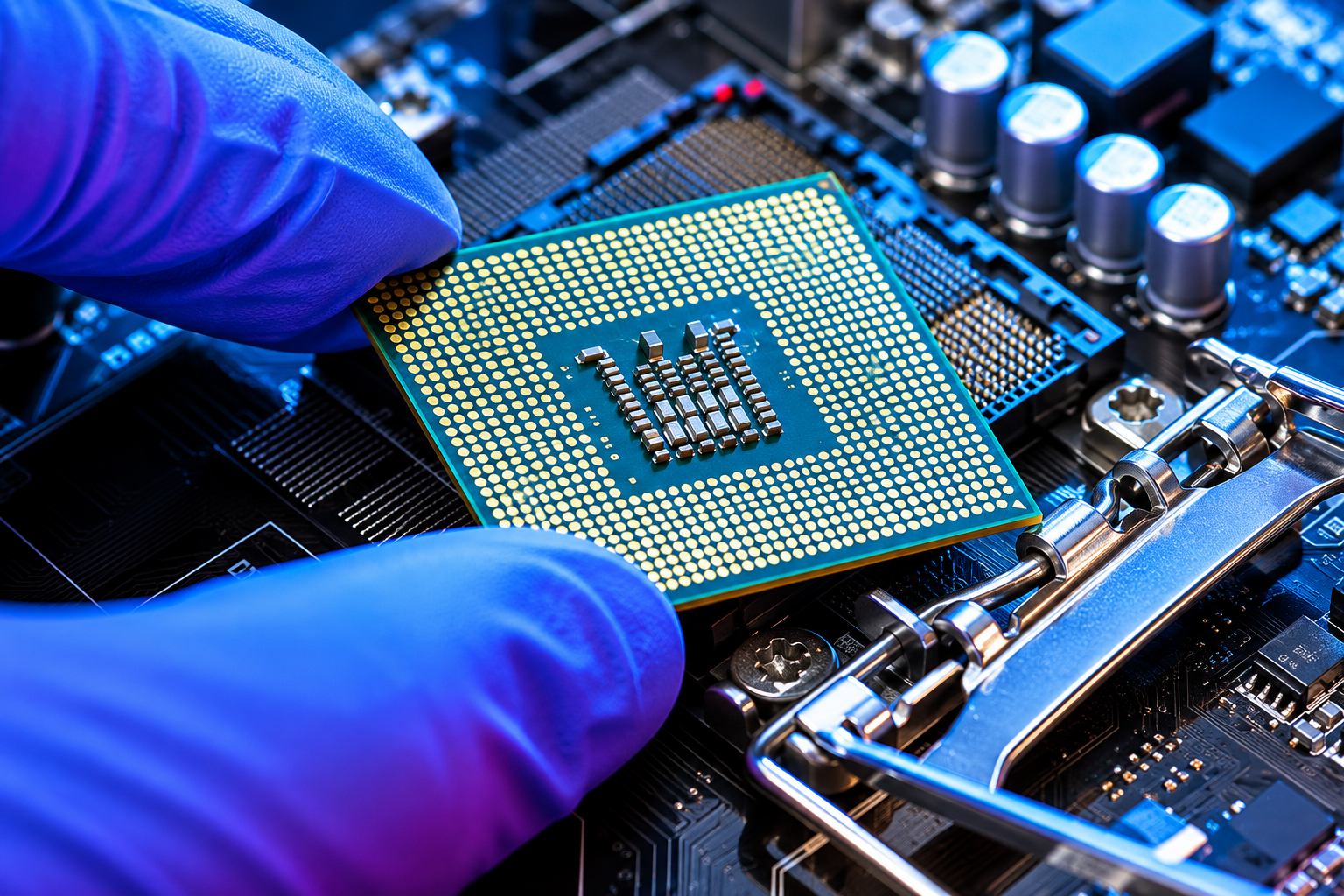
Because air cannot absorb and conduct thermal energy rapidly enough to prevent high-density AI processors from throttling within milliseconds, infrastructure operators have turned to liquid. According to advanced facility standards published by the Open Compute Project (OCP), data center operators are ripping out standard air blowers and installing direct-to-chip (D2C) cold plates. Microscopic copper micro-channels are clamped directly onto the silicon heat spreader, pumping treated deionized fluid across processors to strip away heat before routing it to external evaporative cooling towers.
The Megawatt Interconnection Chokepoint
Even when thermal cooling is solved, data center developers face an unyielding electrical constraint. According to a landmark electrical load study from the Electric Power Research Institute (EPRI), data center electricity consumption could double to nine percent of total United States generation by 2030. In energy market analyses from the International Energy Agency (IEA), researchers highlight that utility companies face four-to-seven-year waiting lists to construct the high-voltage electrical substations and transmission lines needed to power a single gigawatt-scale data center. In modern technology, access to a substation transformer has become more valuable than access to cutting-edge silicon.

Anthony Dami
Technology & Culture writer at Largern, focusing on AI, consumer hardware, film, internet culture, and the routines and tools behind everyday life.
Comments (0)
No comments yet
Be the first reader to share your perspective on this story.