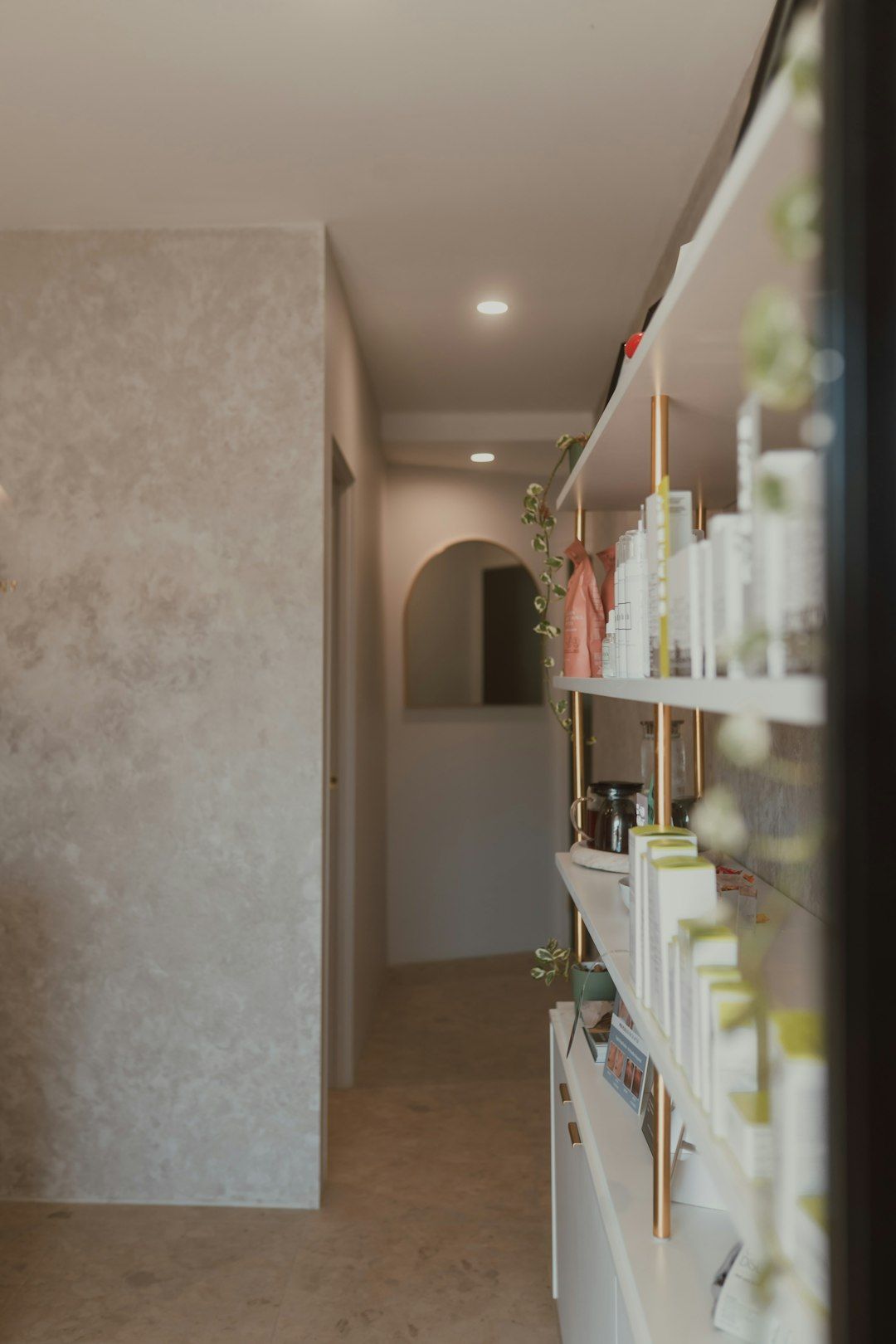
The shelf above a bathroom sink is a good place to watch an idea come apart. Three amber bottles, a refillable pump, a bar of soap in a ribbed dish, and one $130 balm sold as eight products in a single stick. Every object on it was chosen deliberately, and the deliberation cost more than the muddle it replaced. That shelf is the minimalist economy in miniature: the objects changed, the count barely did, and the bill went up.
A Look You Can Buy and a State You Have to Keep
Consumer research tends to split minimalism into three parts. There is the number of possessions a person holds, the preference for sparse and uncomplicated design, and the habit of curating purchases with care. Only the first is a state you have to maintain week after week. The other two are decisions you can complete at a checkout page in about ninety seconds, which is precisely why they get sold so hard.
The aesthetic is the part that photographs. Matte ceramic, unbleached cardboard, an unbranded bottle with a lot number where a logo should be. None of that requires you to own fewer things, and none of it obliges you to part with anything already in the cupboard. A sparse look is a style with a supply chain behind it, and that supply chain is unusually good at implying the style is the practice.
That distinction explains a small daily friction. People who buy their way toward simplicity often end up busier than before, because they now own a handful of items that each demand specific handling. Twelve products is a checklist you follow. Three well-chosen ones is a rule you have to remember, and the rule is only cheap if it stays stable.
What the Skincare Numbers Actually Show
The underlying advice is sound, which is what makes the merchandising hard to see. NIQ consumer tracking puts roughly 75% of shoppers at three skincare products or fewer. Dermatologists have argued for years that stacking many actives raises the odds of incompatible pairings and sensitivity flares, so fewer steps, chosen well, is a defensible position rather than a marketing fiction.
The math gets awkward from there. Market researchers tracking the minimalist beauty segment expect it to compound at about 10.7% a year through 2035. If the number of items per household is flat or falling, growth of that size has to come from somewhere other than volume. The remaining lever is the price of a single item, and multifunction is the tidiest justification for charging more for one object than for the three it replaces.
The comparison pages make the case explicitly. One brand's own marketing argues that assembling eight separate products would run past $500, against $130 for its all-in-one balm. Read that carefully. The alternative being priced is not a simple routine. It is eight premium actives, which is a maximalist cart wearing a beige coat. Divide $130 by eight claimed functions and you get $16.25 per function, most of which a person with no specific skin concern will never activate.
A cleanser, a barrier moisturiser and a sunscreen from a pharmacy shelf cost less than the balm and cover the functions carrying most of the evidence. The consolidation premium buys packaging, convenience and a story about intention. Those are real things to want. They just aren't subtraction, and the difference between the two is where the money goes.
The Wardrobe Version Is Better Documented
Clothing shows the same pattern with cleaner numbers. A 2026 study from resale platform Vestiaire Collective found that 72% of people own more than 100 items and 47% own more than 200, while one in three still reports having nothing to wear on a given morning. The same study found 89% of respondents respond to that feeling by buying more clothes, which leaves the closet fuller and the decision harder.
Against that backdrop, researchers forecast the global capsule wardrobe market climbing from about $4.13 billion in 2026 to $11.42 billion by 2035. The headline rate is 10% a year. Run the figures yourself and $4.13 billion growing to $11.42 billion over nine years is a multiple of about 2.8, which compounds nearer to 11.9% annually. The rounding conceals how quickly the smaller-closet business is expanding.
What a capsule contains is not fixed either. A 2026 analysis of more than 6,700 user-built capsules in the Cladwell app found a midpoint of about 30 pieces, with half of all capsules falling between 19 and 62 items and about 37% holding more than 40. That range is honest and useful, and it also means nobody can sell you the correct number, though plenty will try, priced by the piece.
Where the Complexity Actually Goes
A minimalist purchase passes or fails on one question, which is what it removes. Set four common examples side by side and the ledger sorts itself out faster than any brand copy will.
| Purchase | What it promises | What it actually removes | Net change in objects |
|---|---|---|---|
| All-in-one balm at $130 | Eight products in one | Partly used serums, if you actually bin them | Down one or two, at $16.25 per claimed function |
| Capsule wardrobe kit | A decision-free closet | Nothing, until old clothes physically leave | Usually up |
| Matching hanger set | Visual order | Forty wire hangers | Zero, since forty arrive to replace them |
| Linen storage baskets | A place for everything | Floor clutter, not the objects causing it | Up |
| Refillable pump system | Less packaging waste | Empty bottles | Up at first, down over several years |
Two rows are genuinely subtractive and three are relabelling. The hanger set is the clearest case: forty mismatched hangers leave, forty matching ones arrive, and the wardrobe is tidier without holding one garment less. Tidiness and reduction get used as synonyms throughout this market. They describe different outcomes with different costs, and only one of them changes how much you own.
The benefit people actually report from minimalist practices, which is a quieter head and less time spent searching for things, comes from decision architecture rather than from the finish on a bottle. If a room is arranged so the default action is the intended one, the object count matters considerably less. That is closer to designing an environment that carries the decision for you than to any product line, and it explains why the shoppers with the most carefully curated shelves often still feel scattered.
Which is why the useful version of this advice is behavioural, unglamorous and free at the point of use. It also has an awkward property that no founder enjoys: it cannot be sold, only practised, and it gets harder to market every time someone works out that the shelf was never the problem.
Before any purchase marketed as simplification, write down the two objects it displaces, by name and by location. Half a serum in the bathroom drawer counts because it has an address. "Clutter" does not, because it doesn't. If the list comes back empty, the item is an addition, whatever its packaging suggests, and the cleanest version of that transaction is the one you decline. What genuinely reduces a household is a rule applied without shopping: one thing in, one thing out, with the outgoing object leaving the same day. It is dull, it costs nothing, and it is the only form of minimalism that reliably survives a Saturday afternoon.
Strategic Takeaways
- ✓Minimalist products are a growth business because restraint at the unit level pushes revenue toward price per item, and bundling many functions into one object is the cleanest way to charge more for less.
- ✓Consumer research separates minimalism into owning few possessions and preferring sparse design, and merchandise almost always sells the second while leaving the first untouched.
- ✓The only test that survives contact with a checkout page is which specific objects, named and given a location, leave your home as a result of the purchase.
Largern Staff
Collaborative ideas and essays from the Largern desk on the ideas, habits, and shifts shaping modern life.
Comments (0)
No comments yet
Be the first reader to share your perspective on this story.