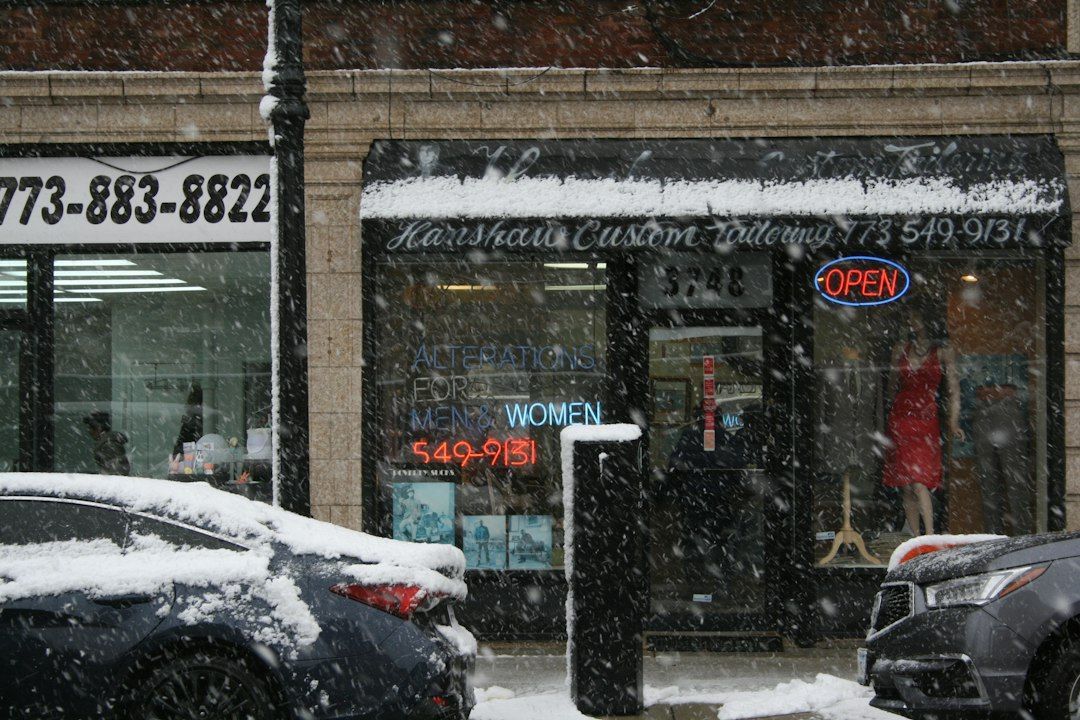
On January 1, a 200-transaction threshold fell out of Illinois tax law. Out-of-state retailers and marketplace facilitators selling into the state no longer need to clear that volume test before collecting the destination sales tax rate, which in Chicago runs at 10.25% on general merchandise. Seven weeks before Small Business Saturday, the City of Chicago and World Business Chicago began asking residents, visitors and employers to spend locally through Chicago Loves Local: 77 Reasons to Shop Small. The price gap that once justified buying gifts online from Chicago has narrowed to shipping speed and return policies.
The Nov. 17 release marks the campaign's second year and its first with World Business Chicago as a strategic partner. The city's economic development organization is steering the message toward employers, asking them to route holiday gifts, corporate celebrations, event supplies and other seasonal purchasing through local vendors. That's a different ask from 2025, when the campaign leaned on residents and reward incentives tied to neighborhood spending. A household working through a reallocated budget is a hard audience to shift. A company with a procurement line can redirect dollars with one signature.
The Ask Has Moved From Households to Balance Sheets
The math of corporate gifting explains why the campaign's center of gravity moved. A mid-size Chicago employer buying 300 client gifts at $60 each commits $18,000 in a single decision. Split across three neighborhood vendors, that's $6,000 per shop, roughly 2.5 percent of a month's average receipts for a small employer firm nationally, and materially more for a single storefront in a thin-margin retail category. No consumer-facing campaign reaches that concentration at the household level, which makes World Business Chicago's involvement the substantive detail in the announcement rather than the branding.
The city already runs several programs in this space. The Department of Business Affairs and Consumer Protection operates a year-round Shop Local Chicago campaign with a marketing toolkit that chambers and individual businesses download and localize. The Office of the City Clerk runs Shopping in Solidarity walks that move shoppers into specific commercial corridors on scheduled dates. Chicago Loves Local sits alongside both, free to any of the 77 community areas through partners such as the Andersonville Chamber of Commerce.
Overlap of that kind is ordinary in municipal economic development, and it carries a cost. Three programs with three toolkits and no shared baseline make it hard to say which one moved spending. The 2026 version at least names a channel that can be counted, because corporate purchasing shows up in invoices and vendor lists rather than in impressions and event attendance.
What the Multiplier Numbers Actually Support
The intellectual case for shopping local rests on the local multiplier, and the underlying research is more granular than the slogan. Civic Economics, a consultancy that has measured independent against chain spending since 2002, studied Chicago's Andersonville commercial district and calculated total local economic impact of $0.68 per dollar of revenue at an independent against $0.43 at a chain competitor. The American Independent Business Alliance aggregates that body of work and reports roughly 48 percent of revenue recirculating locally at independents against under 14 percent at chains.
| Measure | Local independent | Chain competitor |
|---|---|---|
| Local economic impact per $1 of revenue (Civic Economics, Andersonville) | $0.68 | $0.43 |
| Share of revenue recirculated locally (AMIBA aggregate) | About 48% | Under 14% |
| Where profit lands | Local owner, local payroll, local suppliers | Corporate payroll, out-of-state headquarters |
| Local charitable giving | Higher, owner-directed | Set by corporate policy |
| Procurement of goods for resale | More likely from regional suppliers | Centralized distribution network |
Those two findings measure different things, a distinction campaign material usually skips. The $0.68 is total local output per dollar of revenue, counting the spending cycles that follow the first transaction, so it doesn't mean 68 cents stays on the block. The 48 percent is a recirculation share. Both point the same direction while disagreeing on magnitude by more than a factor of two, which makes the multiplier useful for comparing business types and unreliable for promising what a specific purchase will do.
The variance is structural rather than statistical. A Logan Square restaurant buying produce through a regional distributor and paying Chicago wages circulates differently from a franchise location remitting royalties to a parent company in another state. Ownership, supplier geography and wage levels set the multiplier for each corridor, and the campaign's 77-area framing folds all of that into one message. City officials have generally cited the higher figure, which is defensible for advertising and thin for policy.
The Price Gap Illinois Already Closed
The practical case for buying local in Chicago used to rest on price, and the state has removed most of it. Since January 2021, remote retailers and marketplace facilitators selling into Illinois have collected the destination Retailers' Occupation Tax, the same rate a storefront charges. The Leveling the Playing Field for Illinois Retail Act extended that requirement to out-of-state sellers shipping from outside Illinois in January 2025. The January 2026 change dropped the 200-transaction test, leaving gross receipts as the only economic threshold for collection.
The effect on a gift budget is concrete. A $100 item bought from an out-of-state seller in 2019 often arrived without Illinois tax collected at checkout, a de facto discount of $10.25 in Chicago. The same purchase now carries the same rate as the shop on Clark Street. What remains is a set of differences that have nothing to do with tax:
- Delivery time, where a store hands over the item today and a warehouse needs two days.
- Returns, where a counter and a clerk replace a printed label and a drop-off point.
- Occupancy cost, where a storefront lease subsidizes the browsing experience that shoppers then price-check on a phone.
- Inventory depth, where a shelf holds one size and a website holds twelve.
- Chicago's seven-cent checkout bag tax, which applies at the register and not to a parcel left at the door.
Only the bag tax shows up in a line-item comparison, and it favors the website by seven cents. The rest are conveniences whose value depends on the shopper's calendar. That matters for how the campaign is written. If price is close to neutral, the honest pitch is convenience and service rather than thrift, and a message built on duty will underperform one built on what the store actually does better.
Where the Dollars Land
Ownership concentration is what makes local spending a policy question rather than a preference. Small businesses are 99.9 percent of U.S. firms and 99.7 percent of employer firms, according to the Small Business Administration's 2026 FAQ, and they employ 62.3 million people, or 45.9 percent of the private-sector workforce. They also generate 43.5 percent of GDP.
Receipts tell a sharper story. Small firms take 35.0 percent of private-sector receipts, about $17.8 trillion, spread across 6.37 million employer firms. That works out to roughly $2.8 million in average annual receipts per small employer firm. The other 65 percent sits with about 21,000 large firms, implying an average above $1.5 billion. The distance between those two averages is roughly 560 times.
The concentration is the argument. A corporate order of $6,000 barely registers against national averages and matters enormously to one shop in one corridor. Local spending campaigns rarely move numbers of that size because households can't aggregate. Employers can, and the city body best placed to reach them is the one that joined the campaign this year.
The Measure That Would Prove It
Small Business Saturday falls on Nov. 28 this year, and the campaign treats it as the anchor date for a season rather than a target. Nothing in the November materials sets a dollar goal or a corridor-level baseline. That's a gap, because the mechanism being tested is observable. City purchasing records, BACP licensing data and corridor-level sales tax receipts would all show whether employer spending moved into neighborhood vendors during December.
Capacity is the constraint on the vendor side. A bakery that wins a 400-box corporate order needs counter staff and a driver before it needs a marketing plan, and the first ten hires decide whether the order becomes a repeat relationship or a one-off scramble. Campaigns that push demand without touching capacity tend to produce a good December and a quiet January.
There's a version of this that works, and it looks less like advertising than procurement infrastructure. A vetted vendor list, standard invoicing terms that small shops can meet, delivery arrangements that don't require a fleet, and a corporate commitment that survives past the holiday party. World Business Chicago is positioned to build that because its members are the buyers. The alternative is a campaign that generates social posts and leaves the purchasing line untouched.
The Count That Decides the Season
The unresolved question is whether Chicago employers will treat local procurement as a budget decision or a gesture. Corporate holiday spending is planned weeks ahead, which means most 2026 gift budgets were committed before the Nov. 17 announcement. December events and catering decisions are still open, and those are the line items the campaign can realistically capture in its first expanded year.
Residents face a different constraint. Small businesses have absorbed two years of compressed household budgets, and grocery prices have been the loudest inflation story of the autumn. A campaign aimed at households is competing with a spending plan that is already set, which is why the employer ask carries the weight.
The variable that decides whether this holds is the count of purchase orders that clear through neighborhood vendors before Dec. 31. Chicago can measure that number now, from systems it already operates, and the campaign's credibility next November depends on publishing it.
Strategic Takeaways
- ✓Chicago's second-year Chicago Loves Local campaign is now aimed at corporate holiday purchasing, where one employer order can re-route a neighborhood vendor's whole season.
- ✓Illinois requires remote retailers and marketplace facilitators to collect the destination sales tax rate, which has largely erased the price gap that once pushed Chicago gift buyers online.
- ✓Small employer firms average about $2.8 million in annual receipts against roughly $1.6 billion for the largest firms, so procurement dollars carry far more concentrated leverage than consumer campaigns.

Maleek Joshua
Business & Work Editor at Largern, writing about markets, entrepreneurship, careers, and the scenes behind how companies and people make money.
Comments (0)
No comments yet
Be the first reader to share your perspective on this story.